
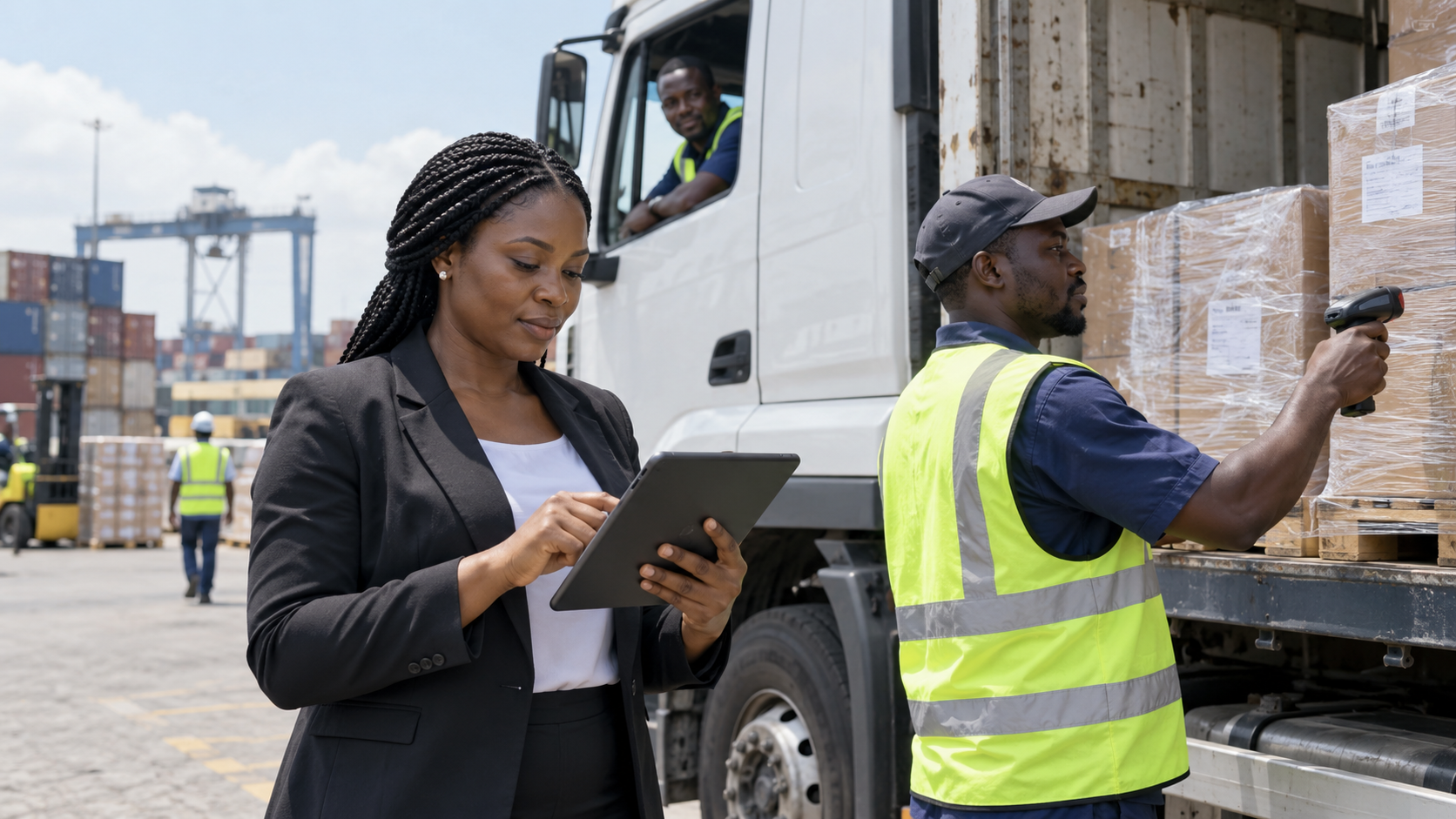
Moving money in Ghana has become remarkably easy. You can send thousands of cedis from Accra to Kumasi within seconds using your phone.
You can order food, pay bills, buy products online and communicate with businesses almost instantly.
But try moving a refrigerator from Accra to Takoradi, transporting shop stock from Tema to Kumasi, delivering building materials to a construction site or finding a truck for a business delivery, and the experience can still become surprisingly complicated.
That gap reveals an important reality about Ghana’s economy: we have digitised information and payments much faster than we have digitised the movement of physical goods.
And that may be one of the biggest opportunities in Ghana’s emerging digital economy.
Ghana Has a Logistics Problem We Rarely Talk About
For many individuals and businesses, arranging transportation for goods still begins with phone calls.
You call someone who knows a driver. The driver calls another person. Someone recommends a truck owner.
A price is negotiated verbally. Pickup details are sent through WhatsApp. The vehicle arrives — or sometimes does not.
This informal system has helped Ghana’s economy function for decades, and many reliable transport operators work within it.
But as businesses expand, e-commerce grows and customers expect greater transparency, the weaknesses become more obvious.
The challenge is not simply finding a vehicle.
The challenge is finding the right vehicle, a dependable driver, a reasonable price and enough information to know what is happening after your goods leave the pickup point.
UN Trade and Development has highlighted logistics and delivery limitations as one of the issues restricting the development of inclusive e-commerce in Ghana.
Ghana has made substantial progress in internet connectivity, digital payments and digital addressing, but physical delivery infrastructure remains an important part of turning online transactions into real economic activity.
The Hidden Cost of Moving Goods
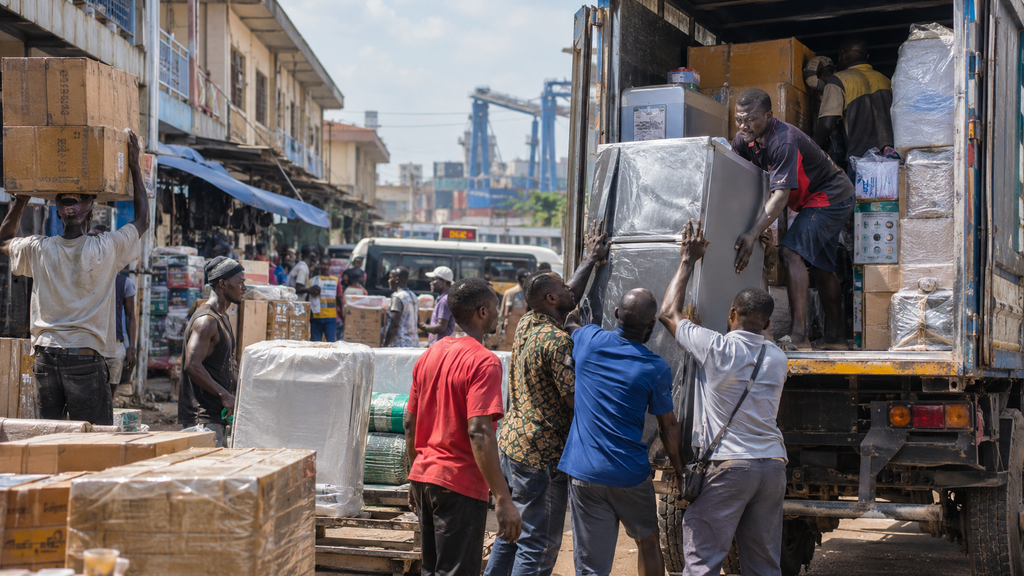
When people talk about logistics costs, they normally think about fuel.
But fuel is only part of the problem.
A truck may travel several kilometres empty before reaching the customer.
A driver may spend hours waiting for goods to be loaded.
Poor information about cargo size may result in the wrong vehicle arriving.
A customer may request a truck without understanding which capacity is actually required.
Then there are traffic delays, loading labour, vehicle maintenance, road conditions, return journeys and the possibility that the vehicle returns empty.
All these factors eventually influence the price the customer pays.
For small businesses, these inefficiencies can be particularly painful.
Imagine a retailer importing goods through Tema and supplying shops in Accra, Kumasi and other cities.
If transportation cannot be planned reliably, logistics becomes more than a delivery problem.
It becomes an inventory, customer-service and cash-flow problem.
Ghana’s Businesses Are Becoming More Digital
The interesting part is that the customers using logistics services are changing.
A Ghanaian entrepreneur can now advertise products on Instagram, receive an order through WhatsApp, collect payment digitally and communicate with a customer almost instantly.
But the final stage remains physical:
How does the product actually get there?
That is why logistics technology could become an increasingly important part of Ghana’s digital transformation.
Digital logistics does not mean replacing truck owners or drivers with technology.
The truck still has to drive. Someone still has to load the goods. Roads still matter.
Technology simply helps organise the process more efficiently.
Instead of asking, “Does anyone know a truck driver?”, a customer should increasingly be able to describe the cargo, identify the route, select an appropriate vehicle, compare available transport options and follow the delivery digitally.
From Phone Calls to Logistics Marketplaces
This is where logistics marketplaces are beginning to change the traditional model.
One Ghana-focused example is CargoMov, a digital logistics marketplace powered by Relocation Masters Ltd.
Rather than operating only as a traditional transport company with a fixed fleet, CargoMov is structured as a marketplace connecting customers who need goods transported with verified drivers and vehicles that can handle those jobs.
Customers can post cargo requirements, specify pickup and delivery locations, describe the cargo, select a preferred vehicle and receive offers from suitable drivers.
The idea is simple, but it addresses one of the biggest weaknesses of informal logistics: information.
When the customer provides accurate cargo information before the journey, drivers can make better decisions about whether their vehicle is suitable and how the job should be priced.
CargoMov also allows customers to compare factors such as price, vehicle suitability, driver information and expected pickup time before accepting an offer.
Accepted deliveries can then move through a digital workflow that provides greater visibility from pickup to completion.
Why Driver Verification Matters
Trust remains one of the biggest issues in logistics.
When valuable business stock, furniture, appliances, construction materials or equipment are placed in someone’s vehicle, the customer is effectively handing over an asset.
Traditional referrals solve some of this problem because people prefer using drivers recommended by someone they trust.
Digital marketplaces need to recreate that trust differently.
CargoMov, for example, requires drivers to submit identity and vehicle information for review before gaining full marketplace access.
Its system is structured around driver and vehicle verification, ratings, delivery records and visible job information.
No verification system can remove every risk.
But structured records provide something that informal transactions frequently lack: accountability.
Better Logistics Could Help Small Businesses Grow
The biggest beneficiaries of digital logistics may eventually be businesses rather than individual customers.
A shop might need weekly stock transfers.
A construction company may regularly require tipper trucks.
A furniture company might deliver products across Accra.
A distributor may need vehicles travelling between Tema, Kumasi, Takoradi and other commercial centres.
For businesses like these, constantly searching for vehicles through personal contacts becomes inefficient.
Digital logistics creates the possibility of building delivery histories, tracking expenses, managing repeat transport requests, keeping invoices and comparing transport options over time.
CargoMov is already positioning its business logistics offering around repeat deliveries, truck access, delivery records and invoice management alongside one-off cargo bookings.
The significance goes beyond one platform.
It points towards how logistics itself may evolve.
Drivers Could Benefit Too
There is another side of the marketplace that is often overlooked: the driver.
Truck owners face their own inefficiency.
A vehicle represents significant capital, but it earns nothing when it is parked.
Even worse, a driver may transport goods from Accra to Kumasi and return to Accra without cargo.
The customer effectively has to pay enough for the original journey to compensate for some of that unused capacity.
Better matching between available vehicles and cargo demand could gradually reduce some of these inefficiencies.
CargoMov’s driver marketplace allows approved drivers to review suitable cargo requests and submit offers for jobs matching their vehicles and availability.
The platform has also introduced a job-discovery system designed to surface appropriate requests based on vehicle and operating requirements.
A more connected logistics market does not guarantee that every truck will always find a return load.
But improving visibility between demand and available transport capacity could make the market more efficient.
Technology Will Not Solve Everything
It is important not to exaggerate what an app can accomplish.
Technology cannot repair poor roads.
It cannot eliminate traffic congestion.
It cannot prevent every mechanical breakdown.
It cannot create perfect addressing everywhere or guarantee that customers always provide accurate cargo information.
And it cannot remove the human element from logistics.
What technology can do is reduce unnecessary uncertainty.
It can help customers provide better information.
It can create clearer pricing processes.
It can help drivers discover appropriate jobs.
It can generate digital records.
It can improve communication.
And it can give customers greater visibility over the movement of their goods.
Those improvements may sound small individually, but across thousands of deliveries they can have significant economic value.
Ghana’s Next Digital Opportunity May Be Physical
For years, much of Africa’s technology conversation has focused on fintech.
Understandably so.
Ghana’s adoption of digital payments and Mobile Money demonstrates how technology can make an everyday economic activity dramatically easier.
Logistics could be another important frontier.
Because every online order eventually becomes a physical delivery.
Every construction project needs materials transported.
Every retailer needs stock.
Every factory needs inputs and distribution.
Every household eventually needs something moved.
The companies that solve these problems will not simply be building delivery businesses.
They will be helping build the infrastructure connecting Ghana’s increasingly digital economy to the physical world.
CargoMov is one example of that transition.
Whether digital logistics marketplaces eventually become the dominant method of arranging cargo transport remains to be seen.
Traditional transport operators, dedicated company fleets and personal driver relationships will continue to play important roles.
But the direction is becoming clearer.
Ghanaians increasingly expect services to be searchable, comparable, trackable and accessible from a phone.
Moving goods is unlikely to remain an exception forever.
Explore CargoMov
Customers who need to move household items, business stock, construction materials or other cargo can use CargoMov to post a cargo request and compare suitable driver offers.
Drivers and vehicle owners can also apply to join the platform.
Businesses requiring recurring transportation can explore CargoMov’s business logistics services.
CargoMov currently supports cargo delivery, truck hire, haulage, construction logistics and other vehicle-based transportation requirements across Ghana.
Useful CargoMov Links
CargoMov Website: https://cargomov.app/
Post a Cargo Job: https://cargomov.app/post-cargo-job?open=1
CargoMov Services: https://cargomov.app/services
Truck Rental Ghana: https://cargomov.app/truck-rental-ghana